Profile
Bernard Arnault: The architecture of modern luxury
LVMH’s chairman and CEO has built a global luxury group by combining heritage, craft and selective scale.
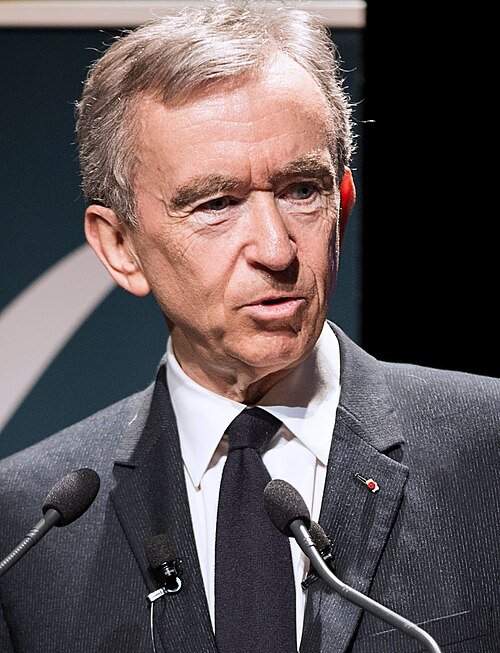
Quick facts
- Born / age
- March 5, 1949, Roubaix, France · 77
- Parents
- Jean Léon Arnault and Marie-Josèphe Savinel
- Education
- École Polytechnique (engineering)
- Companies & ventures
- LVMH, Christian Dior, Groupe Arnault, Fondation Louis Vuitton
Arnault’s career demonstrates how a portfolio can grow while preserving distinct identities for each brand inside it.
Early life and education
Bernard Jean Étienne Arnault was born on March 5, 1949, in Roubaix, France, into an industrial family. His father, Jean Léon Arnault, led the construction business Ferret-Savinel; his mother, Marie-Josèphe Savinel, was a pianist. Arnault’s early environment combined the practical concerns of a family company with a connection to culture and the arts.
He attended schools in northern France and graduated from École Polytechnique, one of the country’s leading engineering schools. He joined the family construction company after his studies, learning finance, property development and organizational management before entering luxury goods.
Companies, holdings and ventures
Arnault’s business career moved through Ferret-Savinel, Financière Agache and Christian Dior before he became majority shareholder and Chairman and CEO of LVMH in 1989. LVMH is a publicly traded group with many luxury houses; he does not personally own every brand in a simple sense, but his family holding company, Groupe Arnault, has played a central role in ownership and governance.
His wider business universe includes Groupe Arnault, which holds family investments, and the Fondation Louis Vuitton, a cultural institution created by the LVMH group. His strategy has been to acquire, develop and protect luxury brands while allowing their individual identities to remain distinct.
A portfolio with distinct voices
Bernard Arnault is Chairman and CEO of LVMH Moët Hennessy–Louis Vuitton, a global luxury group whose businesses span fashion, leather goods, wines and spirits, watches, jewelry, perfume, cosmetics, retail and hospitality.
His central challenge has been to build scale without flattening the identities that make luxury brands valuable. Each house needs its own creative language, history and customer relationship, even as the group supplies capital, operational expertise and global reach.
From turnaround to long-term stewardship
Arnault began his career in the construction business before reorganizing the Financière Agache holding company in the 1980s. His work with Christian Dior and subsequent leadership at LVMH established a strategy centered on investing in brands with deep heritage and broad international potential.
He became LVMH’s majority shareholder and Chairman and CEO in 1989, then helped assemble an organization that treats brand stewardship as both a creative and financial discipline.
The luxury business lesson
Luxury companies cannot rely on volume alone. They depend on scarcity, quality, storytelling and consistent execution. Arnault’s model shows how a corporate group can provide the infrastructure for growth while allowing individual houses to remain recognizably themselves.