Profile
Elon Musk: Building at the edges of technology
A profile of the entrepreneur whose companies span electric vehicles, launch systems, AI and infrastructure.
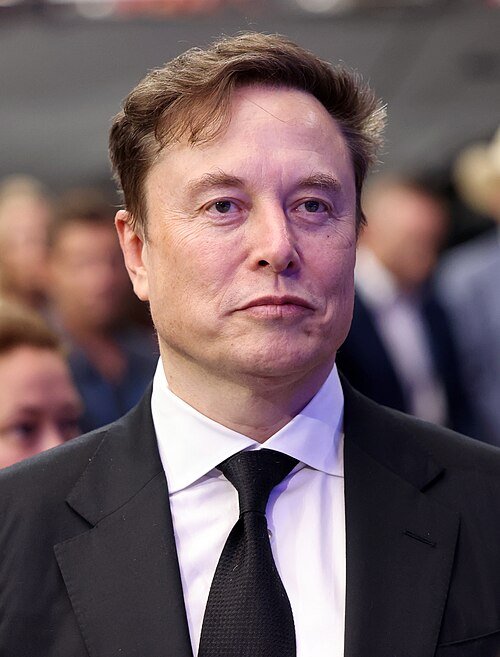
Quick facts
- Born / age
- June 28, 1971, Pretoria, South Africa · 55
- Parents
- Errol Musk and Maye Musk
- Education
- Queen’s University; University of Pennsylvania (physics and economics)
- Companies & ventures
- SpaceX, Tesla, xAI, Neuralink, The Boring Company, X
Musk’s business career is defined by taking capital-intensive bets in categories where technology, manufacturing and regulation meet.
Early life and education
Elon Reeve Musk was born on June 28, 1971, in Pretoria, South Africa. He is the eldest child of Errol Musk, an engineer, and Maye Musk, a model and dietitian. He grew up with his brother Kimbal and sister Tosca. His parents separated while he was young, and Musk has described a childhood shaped by books, computers and an interest in science fiction and engineering.
At 17, Musk moved to Canada, attending Queen’s University in Kingston, Ontario. He later transferred to the University of Pennsylvania and graduated in 1997 with degrees in physics and economics. He enrolled briefly in a Stanford physics graduate program but left almost immediately for the internet industry, which was beginning to attract serious capital and talent.
Companies, holdings and ventures
Musk co-founded Zip2, an online city-guide and business-directory company, with Kimbal Musk. Its sale gave him capital for X.com, an online financial-services venture that became part of PayPal. After eBay acquired PayPal, Musk founded SpaceX. He joined Tesla as an early investor and board chair, then became CEO in 2008. Tesla identifies him as a co-founder, although the company had been established before his involvement.
His broader business portfolio includes xAI, Neuralink and The Boring Company. He acquired Twitter in 2022 and renamed the platform X. These are different businesses with separate structures and investors; his connection to each may be as founder, executive, investor or controlling shareholder rather than simple sole ownership.
The operating idea
Elon Musk has built his public business career around a simple but demanding pattern: place large, long-term bets on industries that are difficult to change from the outside. His companies work in electric transportation, launch services, artificial intelligence, brain-computer interfaces and tunneling—fields where progress depends on engineering, operations, financing and patient execution at the same time.
That approach makes him an unusually visible operator. At Tesla, he has been closely associated with product design, engineering and the global build-out of electric vehicles, batteries and energy products. At SpaceX, the challenge has been different but equally practical: reduce the cost and increase the cadence of space access through reusable systems and integrated manufacturing.
A portfolio of hard problems
Musk’s companies are often discussed as separate ventures, but their common thread is a willingness to build systems from the ground up. The work is not limited to an app or a marketplace. It requires supply chains, physical facilities, specialist talent, regulatory navigation and products that must operate reliably in the real world.
For business leaders, that creates a useful case study in concentration and complexity. Big ambitions can attract attention, but the durable work comes from managing the details that make an ambitious promise commercially viable.
Why the model matters
The scale of these ventures puts Musk at the center of debates about automation, energy, transport, communications and AI. The business lesson is not that every founder needs a moonshot. It is that a focused point of view can help an organization recruit talent, choose tradeoffs and stay committed when a category takes years to mature.