Profile
Jeff Bezos: The discipline of long-term compounding
How customer focus, operational systems and long horizons shaped a company that began with books.
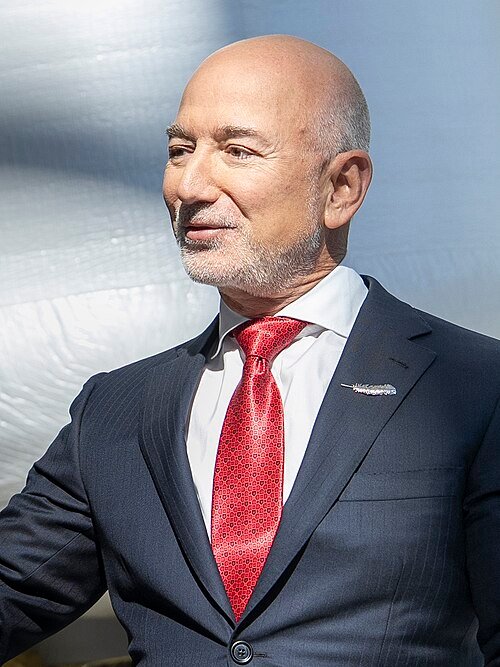
Quick facts
- Born / age
- January 12, 1964, Albuquerque, New Mexico · 62
- Parents
- Jacklyn Gise Jorgensen; raised by Miguel “Mike” Bezos
- Education
- Princeton University (electrical engineering and computer science)
- Companies & ventures
- Amazon, Blue Origin, Bezos Expeditions, Nash Holdings
Bezos turned an early internet retail idea into a larger operating philosophy built around customer experience and reinvestment.
Early life and education
Jeffrey Preston Bezos was born on January 12, 1964, in Albuquerque, New Mexico. His mother, Jacklyn Gise Jorgensen, gave birth to him as a teenager; his biological father was Ted Jorgensen. After Jacklyn married Cuban-born Miguel “Mike” Bezos, Mike adopted Jeff and the family took the Bezos name. The family later lived in Houston and Miami, while Bezos spent time on his grandparents’ Texas ranch.
Bezos earned degrees in electrical engineering and computer science from Princeton in 1986. Before Amazon, he worked in financial technology and investment firms including Fitel, Bankers Trust and D. E. Shaw. Those jobs put him close to the rapid early growth of the web and helped him see online commerce as a significant long-term opportunity.
Companies, holdings and ventures
Bezos founded Amazon in 1994, starting with an online bookstore and building it into a group spanning retail, logistics, devices, entertainment and cloud computing. He became Amazon’s Executive Chair in 2021 after serving as CEO for more than two decades. The chair role keeps him focused on major initiatives rather than the company’s daily management.
Outside Amazon, Bezos founded Blue Origin in 2000. His private investments are associated with Bezos Expeditions, while Nash Holdings owns The Washington Post. He also created the Bezos Earth Fund and the Day One Fund. These organizations are commercial, investment and philanthropic vehicles with different missions and legal structures.
Start with the customer
Jeff Bezos founded Amazon in 1994, when internet commerce was still an experiment for most consumers. The company’s starting point—selling books online—was modest compared with what it became. Its operating idea was not: build the largest catalog immediately. It was to make the customer experience better through selection, convenience and dependable service.
That focus became a decision-making filter. A customer-centered model can sound obvious, but it asks leaders to repeatedly choose durable trust over a short-term win. The effect becomes visible in the small systems: fulfillment, product discovery, customer support and technology infrastructure.
Reinvestment as a strategy
Amazon’s expansion illustrates how reinvestment can become a competitive advantage when it is paired with execution. New capabilities in logistics, digital services, devices and cloud computing all required substantial patience before they became mature businesses. Bezos’s long-term perspective helped make room for initiatives that did not fit neatly inside a quarterly story.
As Amazon’s Executive Chair, Bezos remains connected to the company he founded while also directing attention toward Blue Origin and philanthropy through the Bezos Earth Fund and the Day One Fund.
A lesson in operating leverage
Bezos’s influence is often reduced to ecommerce, but the broader lesson is how a company can turn one operating strength into several. A technology platform, logistics network or customer relationship can support more than one product line when it is developed with enough discipline.