Profile
Sam Altman: Commercializing the AI frontier
The OpenAI co-founder and CEO is helping define how advanced AI reaches businesses, developers and the public.
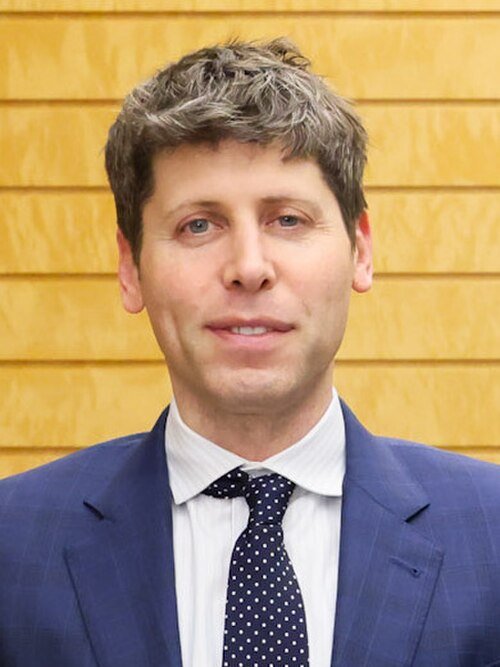
Quick facts
- Born / age
- April 22, 1985, Chicago, Illinois · 41
- Parents
- Connie Gibstine and Jerry Altman
- Education
- John Burroughs School; Stanford University (did not graduate)
- Companies & ventures
- OpenAI, Loopt, Y Combinator
Altman’s leadership sits at the intersection of cutting-edge research, product deployment and the public debate around AI.
Early life and education
Samuel Harris Altman was born on April 22, 1985, in Chicago to Connie Gibstine, a dermatologist, and Jerry Altman, a real-estate broker. The family moved to the St. Louis area when he was young. Altman has described receiving an Apple Macintosh at age eight, an early experience that sparked an interest in computers, programming and technology.
He attended John Burroughs School in Ladue, Missouri, and later studied computer science at Stanford University. He left Stanford after two years without completing a degree, choosing to build a location-based social-networking company during the early smartphone era.
Companies, holdings and ventures
Altman co-founded Loopt in 2005. The company was part of Y Combinator’s first startup batch and was later acquired by Green Dot. He then became president of Y Combinator, where he worked with early-stage companies before leaving that position to focus on OpenAI.
He co-founded OpenAI and serves as its CEO. OpenAI is the center of his current career, though it includes research, product, infrastructure and partnership work rather than a traditional founder-owned structure. His earlier roles at Loopt and Y Combinator explain why he is connected with both company formation and artificial intelligence.
Turning research into tools
Sam Altman is co-founder and CEO of OpenAI, the company behind widely used AI systems for conversation, generation and developer work. His role has put him at the center of a fast-moving question: how should powerful new technology move from research environments into everyday products and businesses?
That question is operational as well as philosophical. Deployment requires infrastructure, product design, safety work, partnerships, pricing and support for the people building with the technology.
A leadership challenge without a playbook
AI companies face a unique combination of pressures. They must innovate quickly, communicate clearly and manage risks that are technical, social and economic at once. Altman’s public leadership has focused attention on the opportunities that AI could create, alongside the responsibility to direct its benefits broadly.
For executives, the lesson is not to treat AI as a side project. It is increasingly a strategic capability that demands governance, skills and a clear view of where it adds real value.
The business question ahead
OpenAI’s impact will be measured not only by what its models can do, but by how responsibly and effectively organizations use them. Altman’s career makes that practical challenge impossible for leaders to ignore.